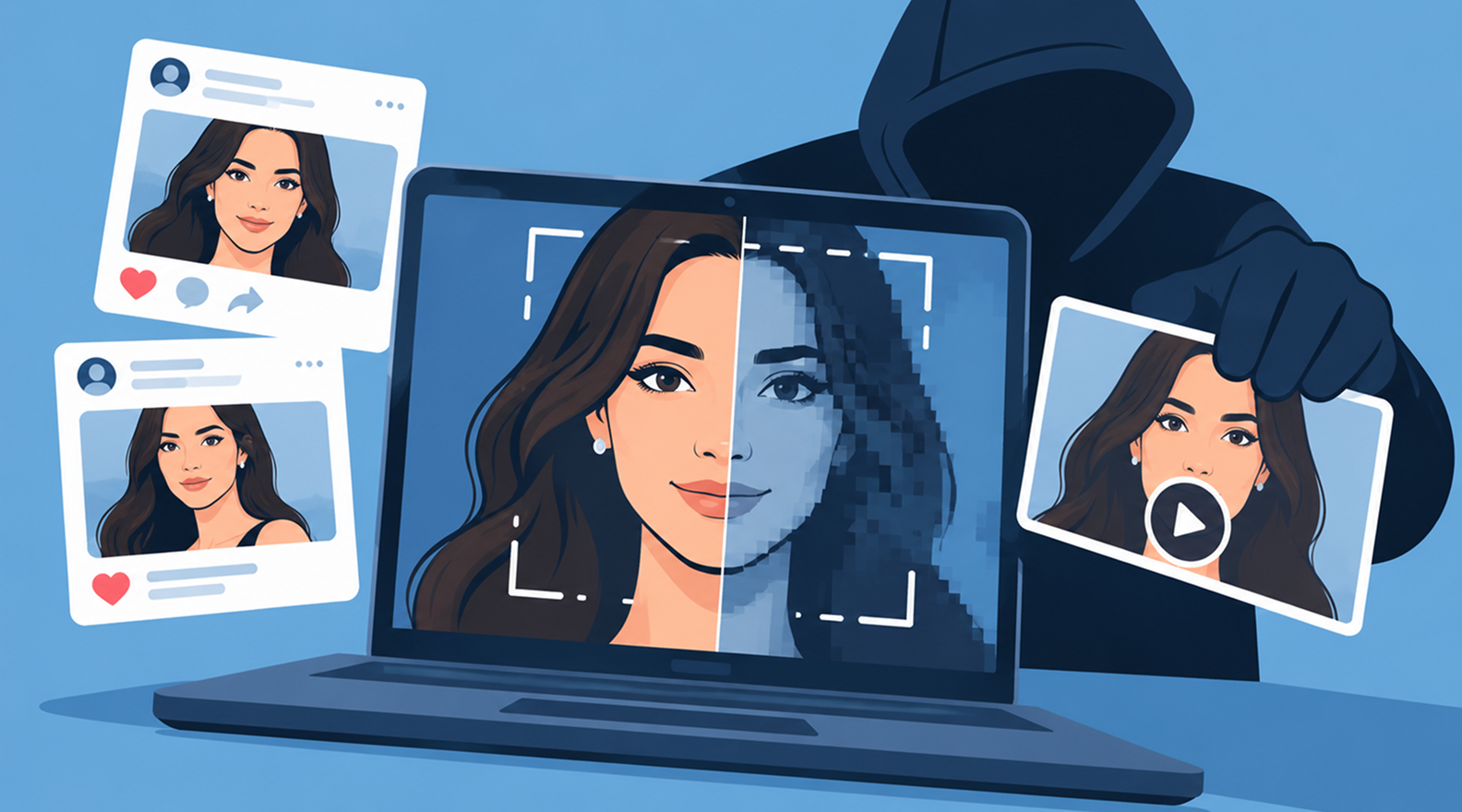
Borrowed fame, borrowed credibility
Most people do not start from zero when they see a well-known actor, athlete, or host. They start from recognition. Fraud operations exploit that shortcut. The ad, clip, or landing page does not have to prove the offer is real. It only has to look like someone the viewer already trusts is standing behind it.
Some of these materials are advanced deepfakes. Many are simpler: a stolen still, a fake caption, a cloned thumbnail, and a site dressed up like a news segment. The method varies. The purpose does not. The scam is borrowing authority it never earned.
How the pitch usually appears
- Social ads showing a celebrity “endorsing” a trading platform
- Edited or generated video that looks like an interview
- Press-style pages with logos, quotes, and a countdown
- Direct messages from impersonated influencer accounts
After the click, the path often looks like any other investment lure: a polished dashboard, an account manager, easy deposits, and a withdrawal that never clears.
Evidence that actually helps
Save the ad or video, the URL, the account that distributed it, later chats, and the payment path. Write down which public figure was being imitated and what claim they appeared to make. If the page disappears, screenshots and timestamps can still reconstruct the pattern.
What a structured report adds
Celebrity-likeness cases are messy because visual trust, a fake news wrapper, and later payment pressure sit in different places. Claimora maps those layers into one file: first contact, the likeness used, the landing page, the account setup, and the money movement. Clarity is the product, not a guaranteed refund.